FORCE PLATE
Aalborg Athlete Analysis — lab-grade hop-data til 1% af prisen.
Aalborg Athlete Analysis — lab-grade jump data at 1% of the cost.
Microcontroller · Sensors · Web UI · Python
Prototype Demo & Gennemgang Prototype Demo & Walkthrough
🔊 Videoen afspilles automatisk uden lyd. Klik på højttaleren for at slå lyden til.
🔊 Video demonstration in Danish only. Click the speaker icon to enable audio.
Problemet The Problem
Jeg er gymnast. Jeg har brugt år på at træne eksplosivitet for at forbedre performance i tumbling og trampolin ligesom mange andre. Det er dog meget sværere at vurdere progression sammenlignet med almindelig styrketræning, hvor belastning og gentagelser er kvantificerbare. Peak force production, Rate of Force Development (RFD) og Reactive Strength Index (RSI) er uden tvivl vigtigere for atleter i eksplosive sportsgrene end ren råstyrke. Professionelle force plate systemer gør det muligt for atleter at måle de nævnte parametre, men de er dyre og ikke særligt udbredte. Gymnastikforeningerne, idrætsefterskolerne og funktionelle fitnesscentre, der kunne have størst gavn af disse data, har sjældent adgang til det.
I am a gymnast. I have spent years training for explosiveness to improve performance in tumbling and trampoline like many peers. It is, however, much more difficult to assess progression compared to regular strength training, where load and repetitions are quantifiable. Peak force production, Rate of Force Development (RFD) and Reactive Strength Index (RSI) are arguably more important for athletes in explosive sports than sheer strength. Professional force plate systems do allow athletes to measure the mentioned attributes, but they are expensive and not widely used. The gymnastics clubs, sports boarding schools and functional fitness clubs that could benefit the most from this data seldomly have access to it.
Med moderne generative AI-værktøjer er kløften mellem "jeg ved hvad der skal måles" og "jeg har fungerende kode der måler det" kollapset. Jeg kender biomekanikken. Jeg ved hvordan kraftkurven for et godt hop ser ud. At bygge hardwaren og softwaren til at opfange og visualisere det er nu et spørgsmål om dage, ikke måneder.
With modern generative AI tools, the gap between "I know what to measure" and "I have working code that measures it" has collapsed. I know biomechanics. I know what the force curve of a good jump looks like. Building the hardware and software to capture and visualize it is now a matter of days, not months.
Hypotesen The Hypothesis
Standard load cells og en ESP32 kan producere lab-grade kraftkurve-data til cirka 1% af prisen på kommercielle systemer. En tablet-tilgængelig web-brugerflade betyder ingen softwareinstallation, ingen bærbar computer påkrævet, og enhver træner kan betjene det. Analysen — peak force, time of flight, jump height, RFD — kan beregnes direkte i browseren og visualiseres med det samme.
Off-the-shelf load cells and an ESP32 can produce lab-grade force curve data at roughly 1% of the cost of commercial systems. A tablet-accessible web interface means no software installation, no laptop required, and any coach can operate it. The analysis — peak force, time of flight, jump height, RFD — can be computed in the browser and visualized instantly.
Det kommercielle koncept Aalborg Athlete Analysis bringer den specialudviklede hardware i spil med 8-ugers forløb med viden om træning og kost, samt måling af progression gennem forløbet i specifikt vertikale hop og sprint.
The commercial concept Aalborg Athlete Analysis brings the custom developed hardware into action with 8-week programs with knowledge about training and nutrition and measuring progression throughout the program in specifically vertical jumps and sprint.
Iterationslog Iteration Log
V1 — Proof of Concept V1 — Proof of Concept
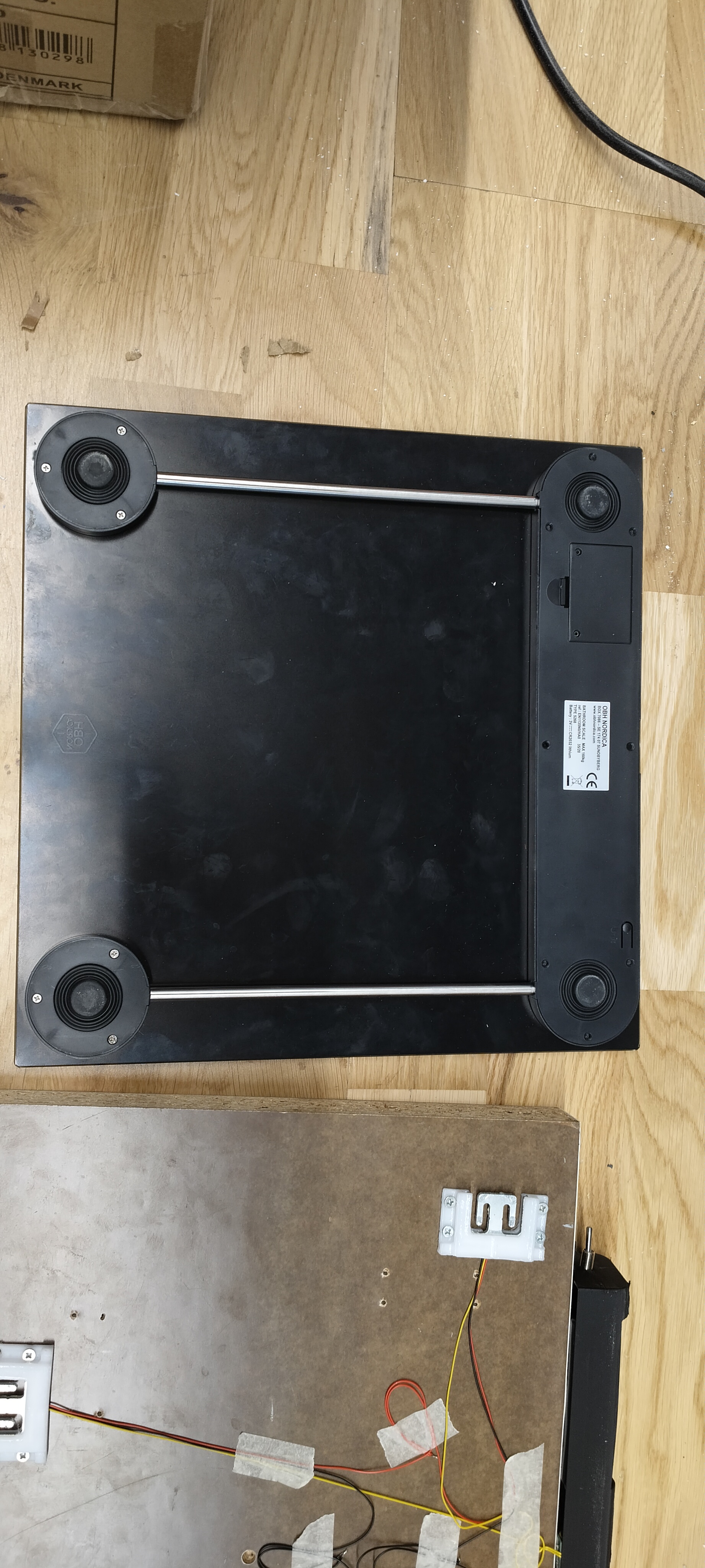
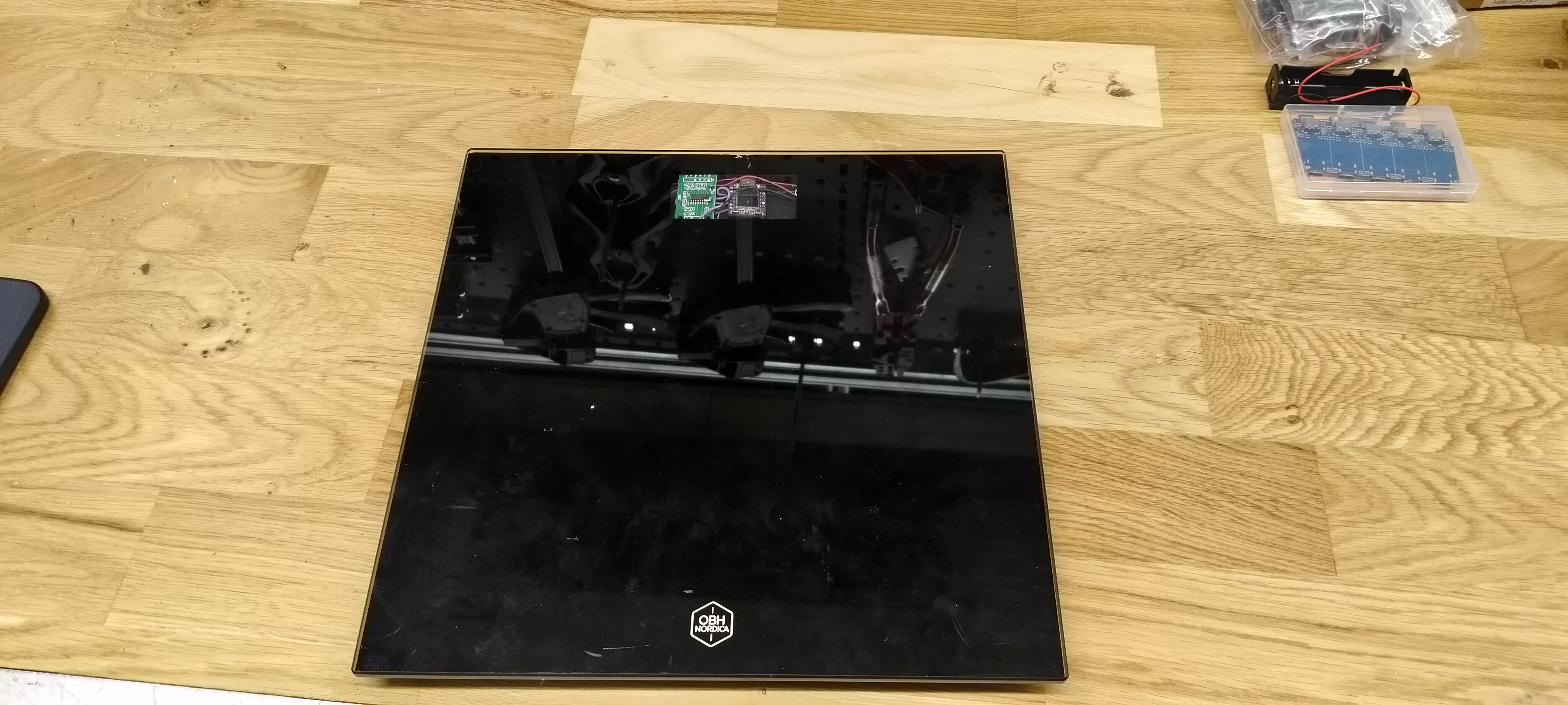
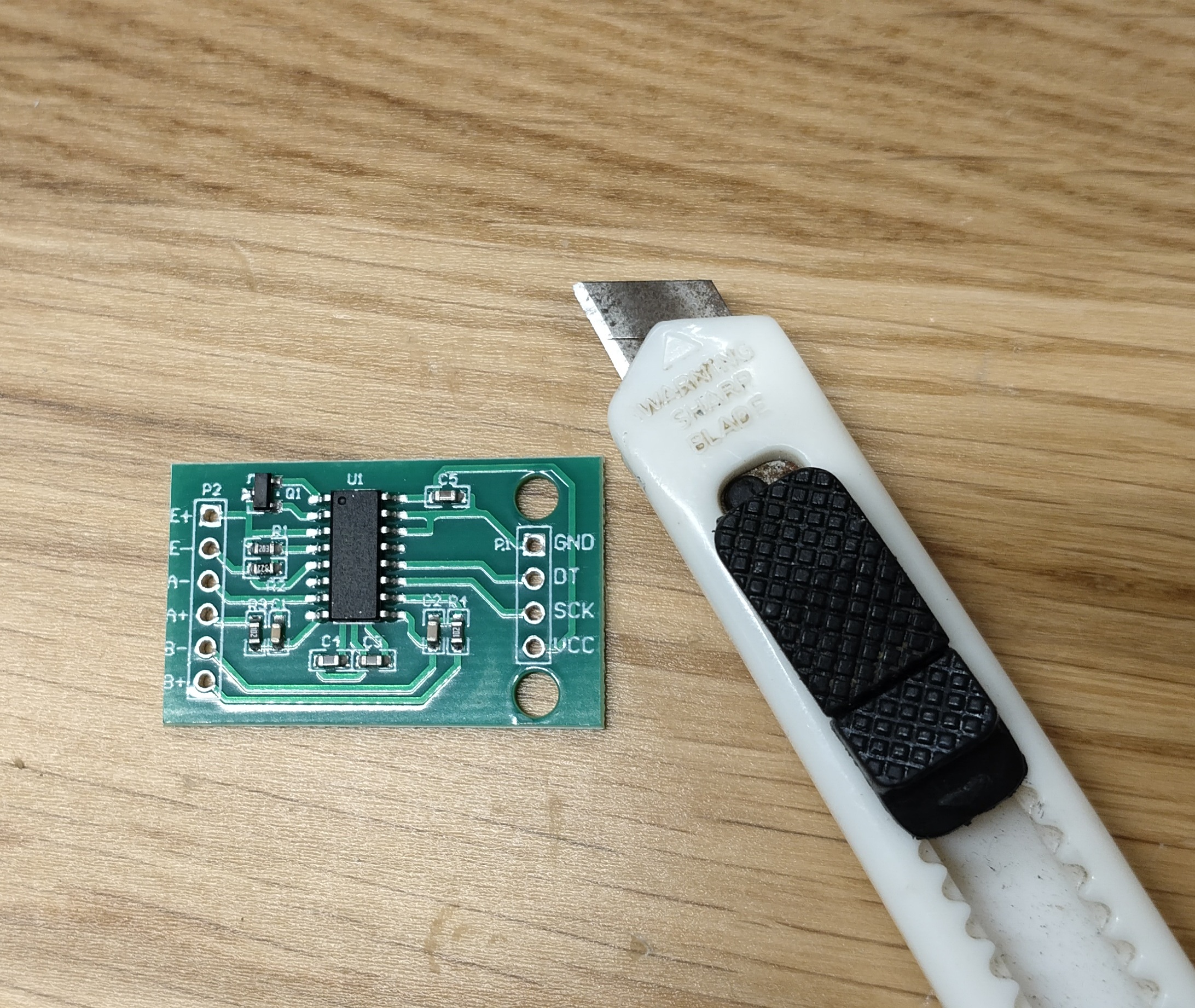
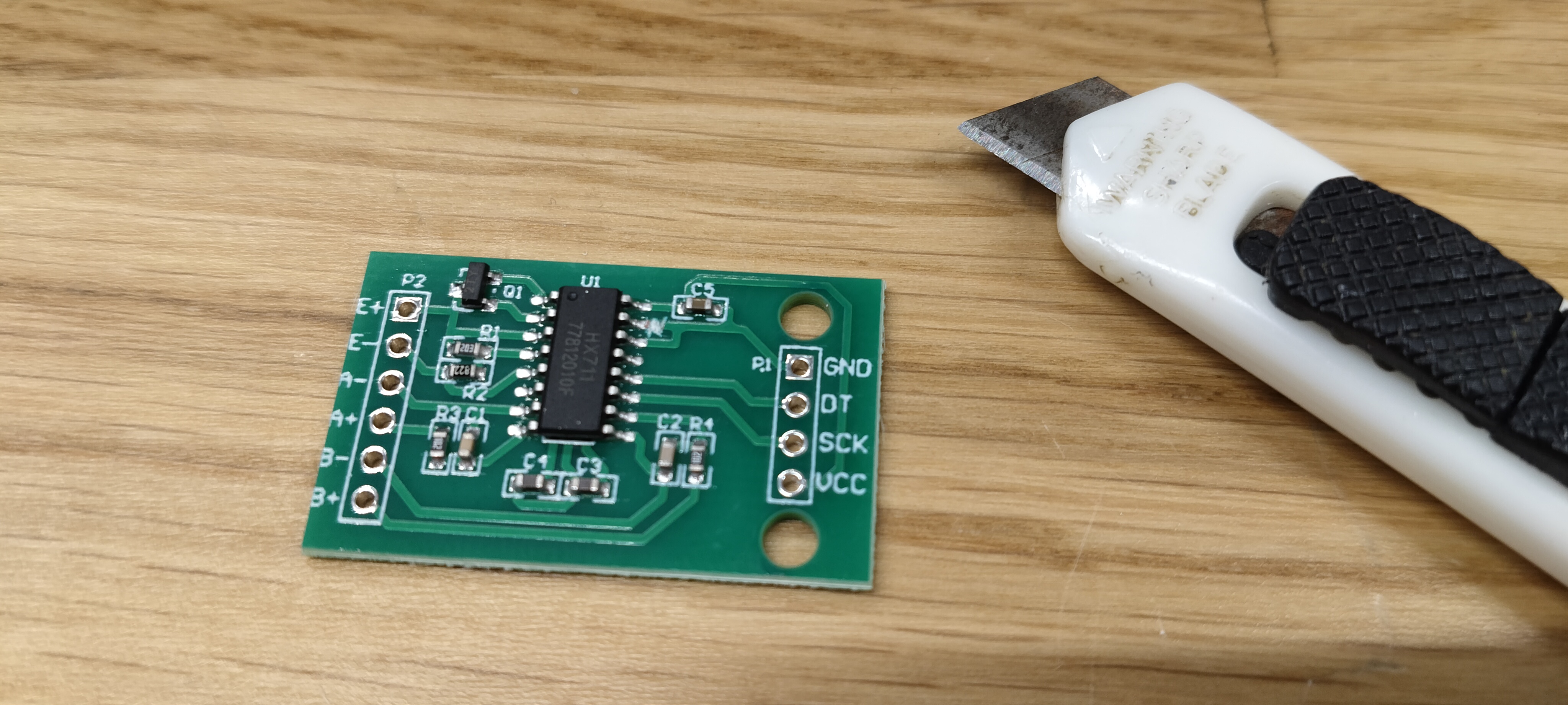
Den første version var en hacket badevægt ombygget med en HX711 forstærker og en ESP32. Firmwaren kørte en minimal webside over WiFi, hvor man kunne tarere vægten, starte en 5-sekunders optagelse og downloade en rå CSV-fil til senere analyse.
The first version was a hacked bathroom scale retrofitted with a HX711 amplifier and an ESP32. The firmware served a minimal web page over WiFi where you could tare the scale, trigger a 5-second recording, and download a raw CSV for later analysis.
Den første version blev testet på mig selv og en håndfuld gymnaster. Fysikken virkede. Dataene var rene nok til at se tydelige forskelle mellem atleter. Hovedproblemet var, at badevægten af glas føltes skrøbelig og havde et for lille areal. Derudover foreslog brugerne en "trafiklys"-indikator til at forberede sig på hoppet.
The first version was tested on myself and a handful of gymnasts. The physics worked. The data was clean enough to see clear differences between athletes. Main problem was the glass bathroom scale feeling fragile and too small footprint. Also, the users proposed a "traffic light" indicator to prepare for the jump.
V2 — Brugbar i felten V2 — Usable in the Field
Den første version var ikke noget, man bare kunne give til en træner og gå sin vej. V2 fokuserede fuldstændigt på at gøre det uafhængigt af operatøren.
The first version was not something you could hand to a coach and walk away from. V2 focused entirely on making it operator-independent.
Væsentlige ændringer:
Major changes:
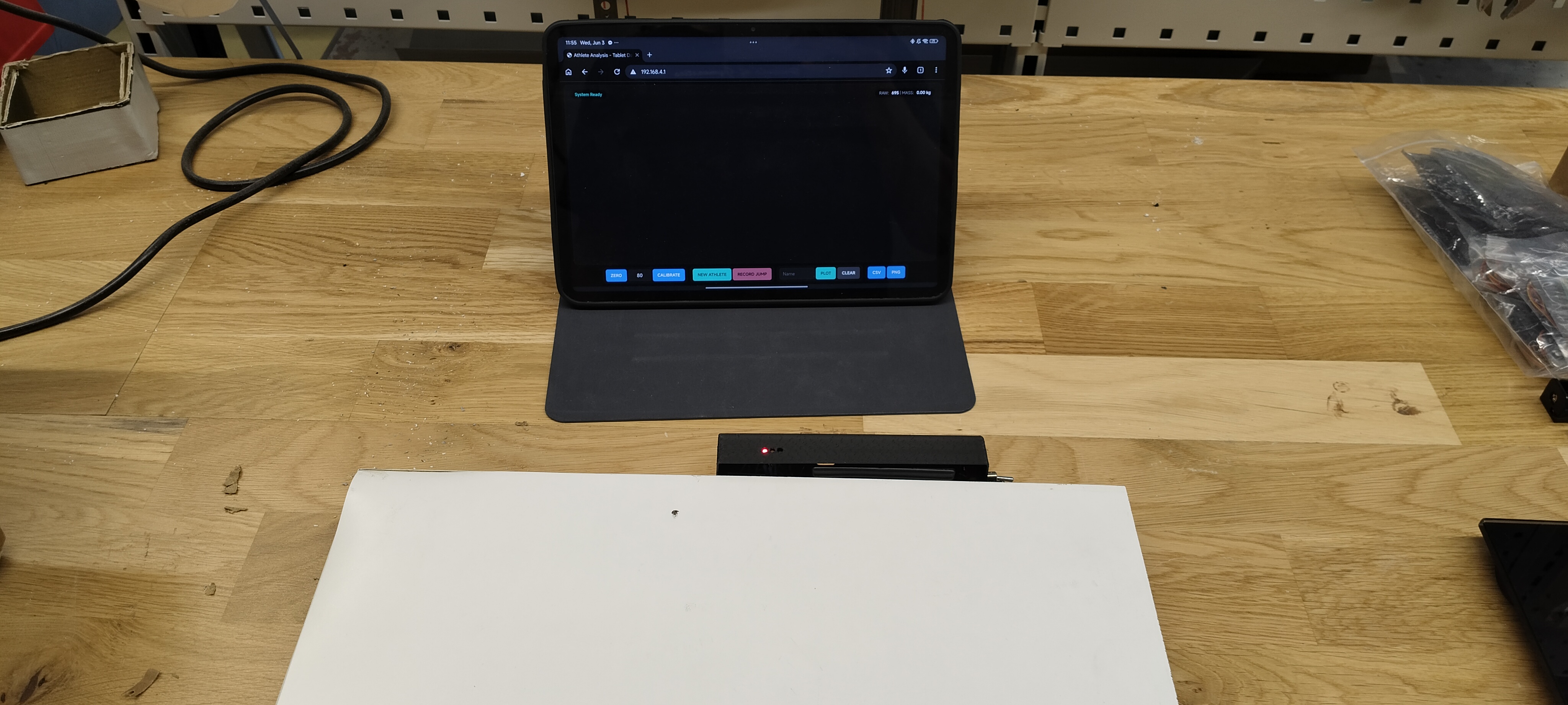
- LED-trafiklyssekvens: Rød (setup) → Gul (forbered) → Grøn (optager). Atleten ved præcis, hvornår der skal hoppes.
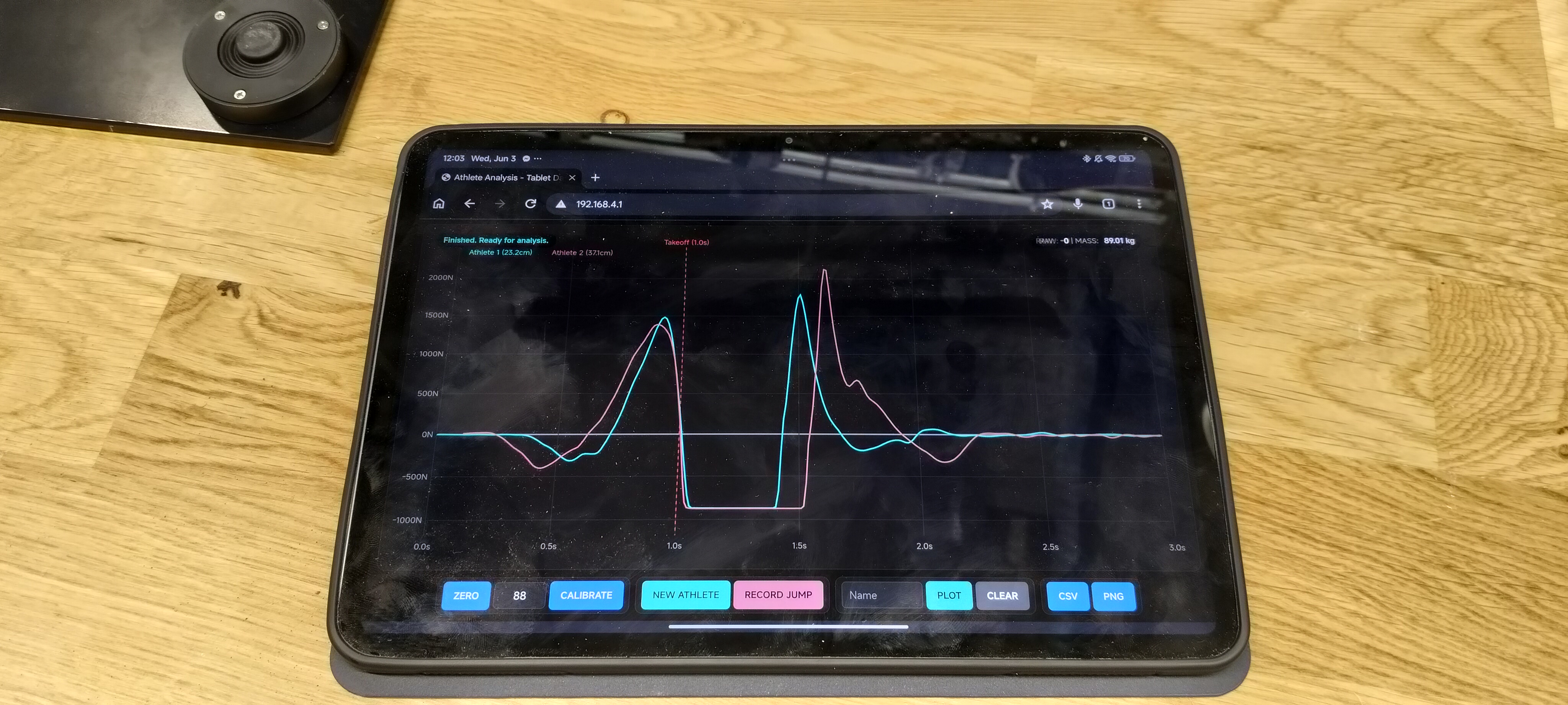
- Web-baseret analyse: Hop-analyse-algoritmen blev porteret til JavaScript og kører direkte i browseren. Operatøren ser en overlaid kraftkurve-graf øjeblikkeligt på tabletten.
- Tidsjusterede overlays: Alle hop forskydes, så afsæt sker ved præcis t=1,0s på grafen, hvilket muliggør direkte sammenligning af accelerations- og decelerationsprofiler på tværs af atleter og sessioner.
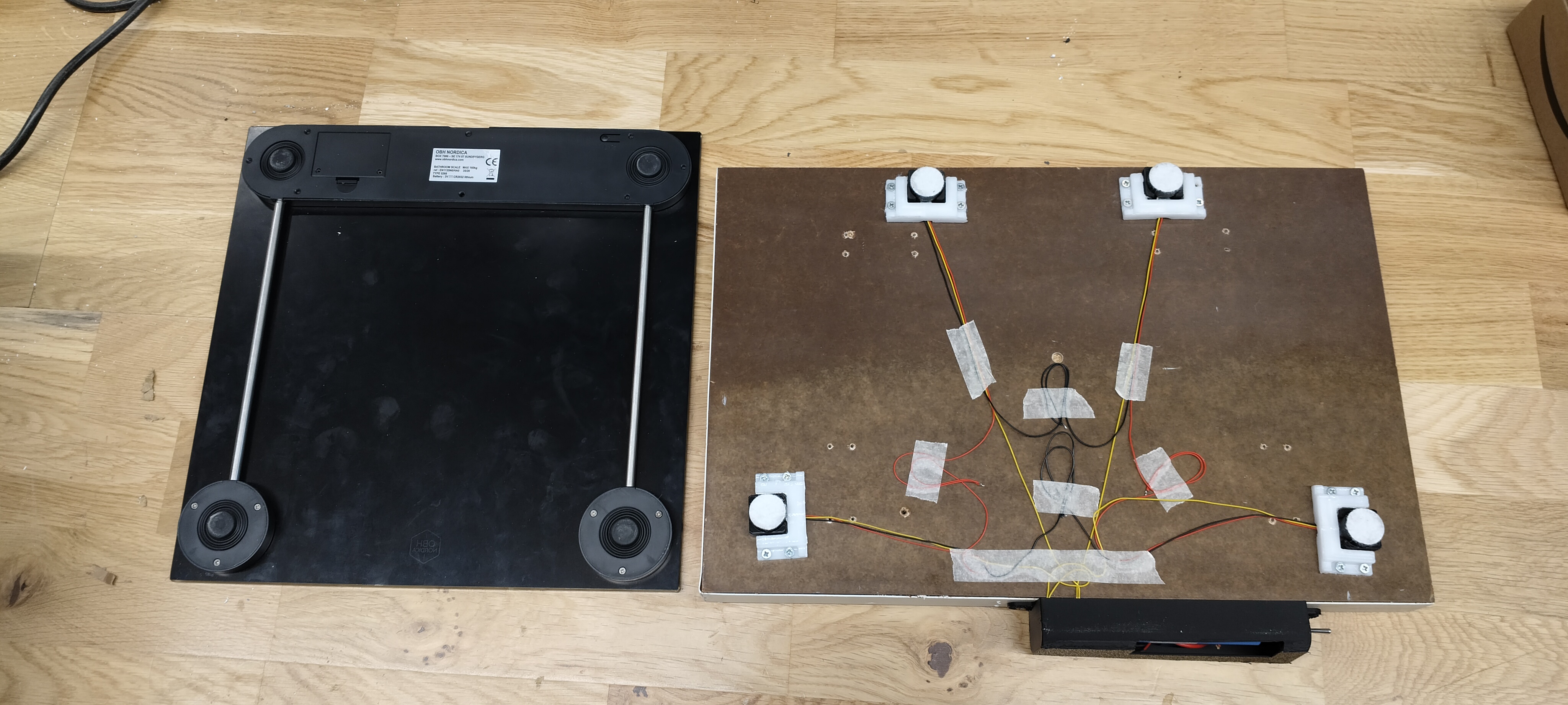
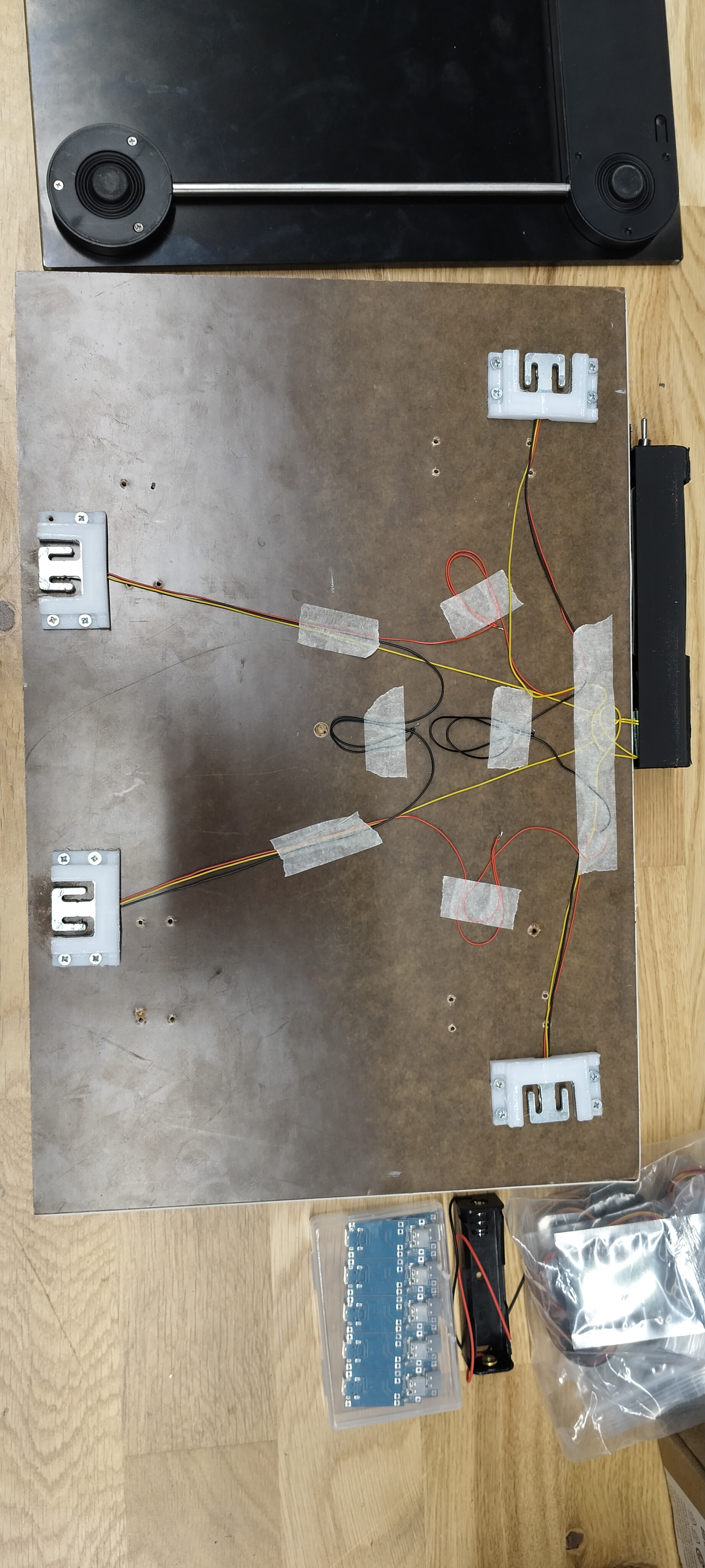
- Robust opbygning: Elektronikken er monteret på en tyk og meget bredere træblok.
- LED traffic light sequence: Red (setup) → Yellow (prepare) → Green (recording). The athlete knows exactly when to jump.
- Web-based analysis: The jump analysis algorithm was ported to JavaScript and runs directly in the browser. The operator sees an overlaid force curve plot instantly on the tablet.
- Time-aligned overlays: All jumps are shifted so takeoff occurs at exactly t=1.0s on the plot, enabling direct comparison of acceleration and deceleration profiles across athletes and sessions.
- Robust build: The electronics are mounted to a thick and much wider wooden block.
Teknisk opbygning Technical Build
Hardware Arkitektur Hardware Architecture
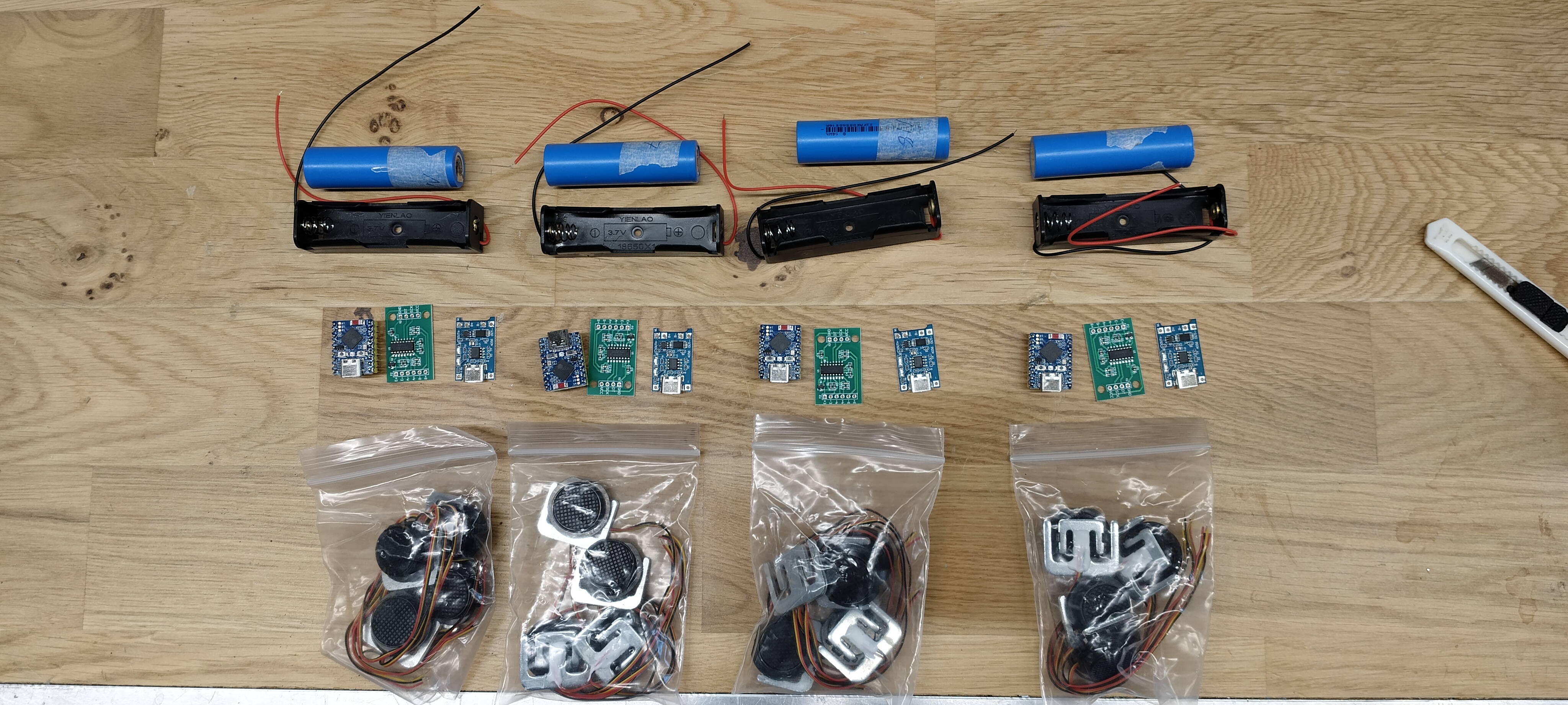
- Load cells: 4x 50kg Load Cells i Wheatstone-bro med HX711 forstærker
- Microcontroller: ESP32-S3 Zero
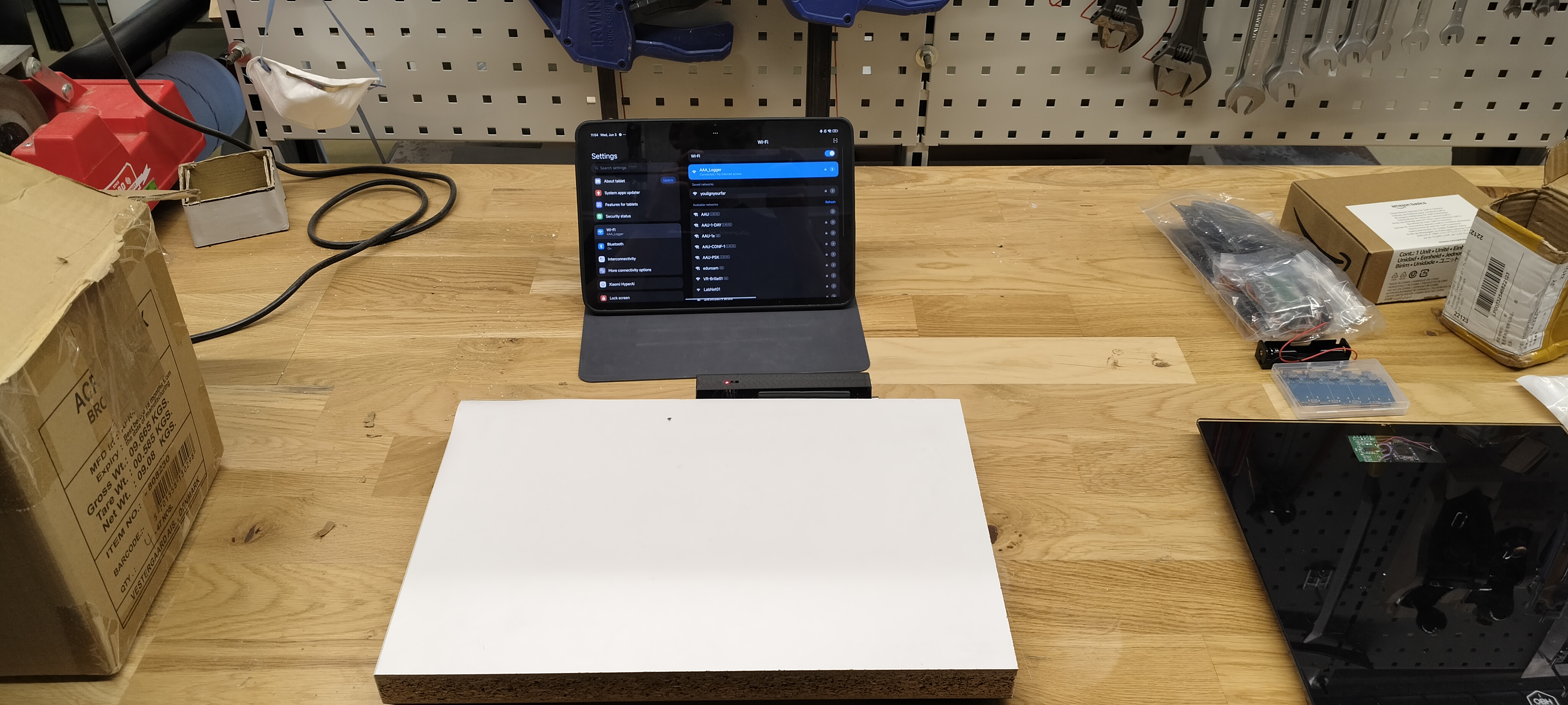
- WiFi: Soft AP-tilstand — ingen router nødvendig, tabletten forbinder direkte til pladen
- Sampling rate: ~80Hz
- Load cells: 4x 50kg Load Cells in Wheatstone bridge with HX711 amplifier
- Microcontroller: ESP32-S3 Zero
- WiFi: Soft AP mode — no router required, tablet connects directly to the plate
- Sampling rate: ~80hz
Embedded Software Embedded Software
Firmwaren kører en state machine, der styrer kalibrering, atlet-opsætning, optagelse af hop og hentning af data. Under optagelse streamer ESP32 tidsstemplede kraftmålinger (millisekunder; Newton) til FFat storage. Efter optagelse henter web-UI'en CSV-filen og renderer analysen på klient-siden.
The firmware runs a state machine managing calibration, athlete setup, jump recording, and data retrieval. During recording the ESP32 streams timestamped force samples (milliseconds; Newtons) to FFat storage. After recording, the web UI fetches the CSV and renders the analysis client-side.
CSV-formatet er letlæseligt og ligetil at genanalysere offline i regneark eller Python, hvis det er nødvendigt.
The CSV format is human-readable and trivial to re-analyse offline in spreadsheets or Python if needed.
Web-brugerflade & Analyse Web Interface & Analysis
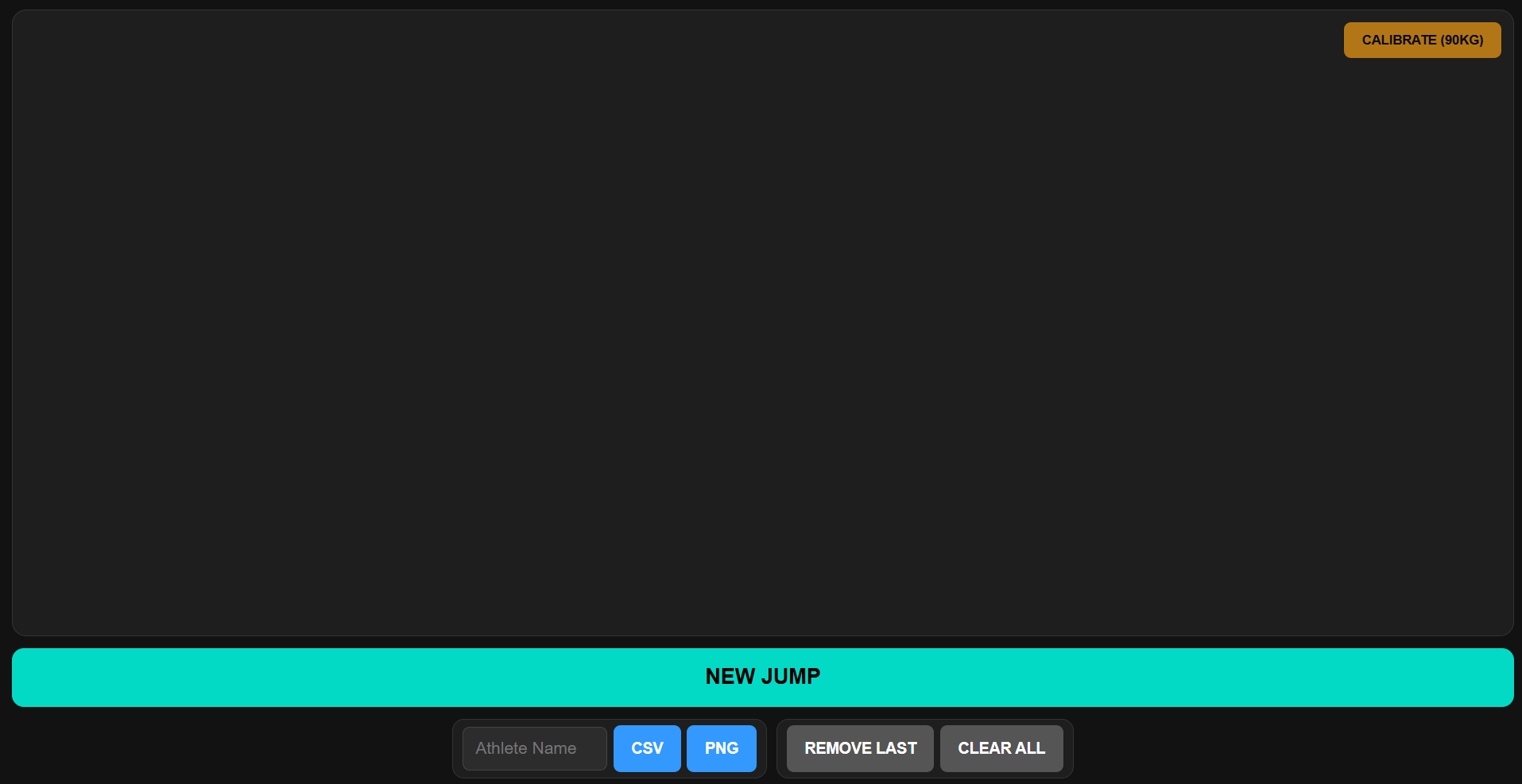
Tablet-UI'en har fire sektioner: Kalibrering, Atlet-opsætning, Optag hop og Analyse. Analyse-panelet viser en Canvas-baseret overlay-graf over de optagede hop, tidsjusteret til afsæt. Målinger vist pr. hop: Peak Force (N), Jump Height (cm), Time of Flight (ms).
The tablet UI has four sections: Calibration, Athlete Setup, Record Jump, and Analysis. The analysis panel renders a Canvas-based overlay plot of the recorded jumps, time-aligned to takeoff. Metrics displayed per jump: Peak Force (N), Jump Height (cm), Time of Flight (ms).
Fremtidig retning — Tilføjelse af IMU sprintanalyse Future Direction — Add IMU Sprint Analysis
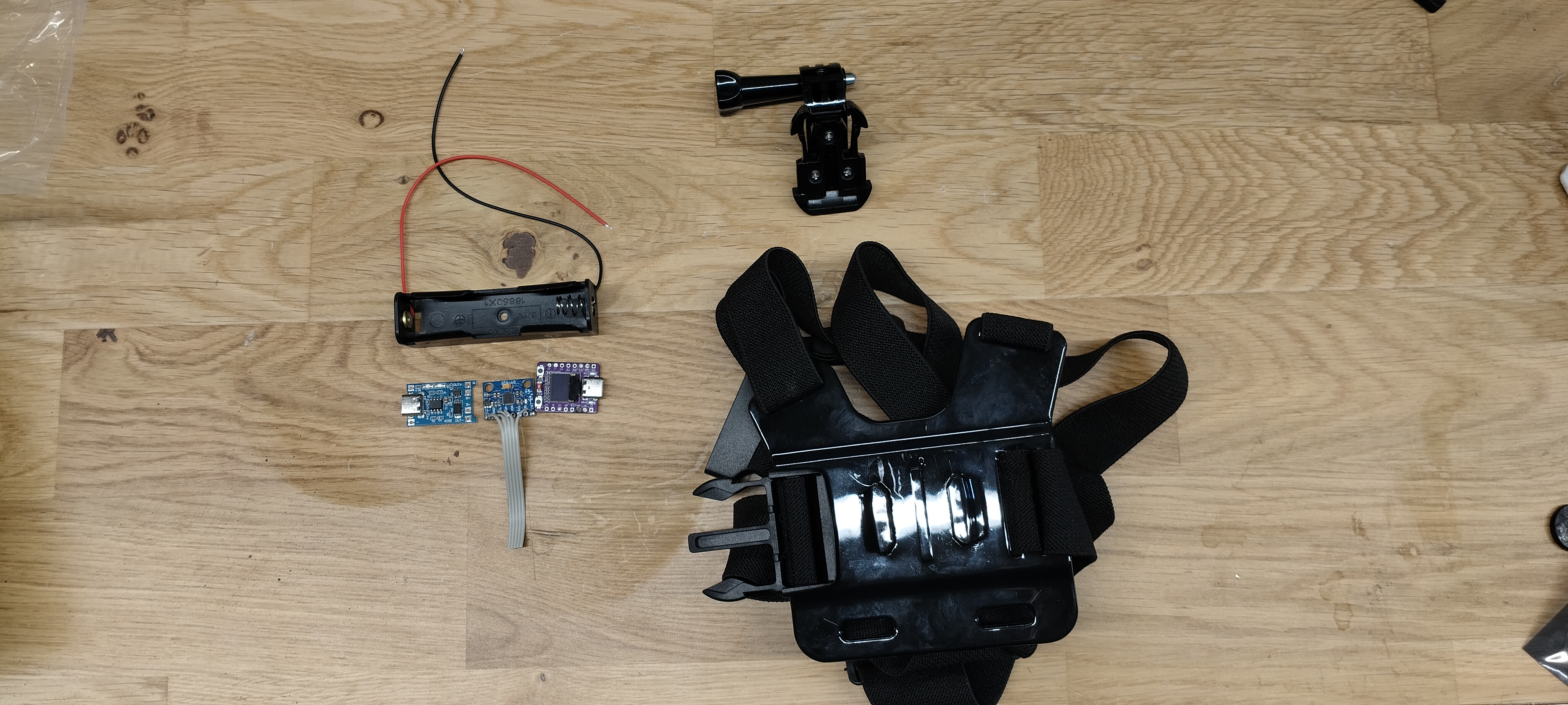
Den næste udvidelse under Aalborg Athlete Analysis-konceptet er en sprintanalyse-vest med en MPU6050 IMU på 100Hz med DMP (Digital Motion Processor). Monteret i en ombygget brystsele i GoPro-stil opfanger IMU'en vertikal forskydning, accelerationskurver og hældningsvinkel under en sprint.
The next expansion under the Aalborg Athlete Analysis concept is a sprint analysis vest using an MPU6050 IMU at 100Hz with DMP (Digital Motion Processor). Mounted in a retrofitted GoPro-style chest harness, the IMU captures vertical displacement, acceleration curves, and lean angle throughout a sprint.
Tidsforbrug Time Investment
| Fase | Timer (ca.) |
|---|---|
| V1 prototype | 25 |
| V2 | 10 |
| V3 | 25 |
| I alt | 60 |
| Phase | Hours (approx) |
|---|---|
| V1 prototype | 25 |
| V2 | 10 |
| V3 | 25 |
| Total | 60 |
Brugervalidering User Validation
15 atleter målt. Vigtigste resultater:
15 athletes measured. Key findings:
- Kraftkurvens form er umiddelbart forståelig for atleter og andre trænere uden nogen oplæring.
- LED-trafiklyssekvensen blev universelt forstået uden forklaring.
- Force curve shape is immediately interpretable by athletes and other coaches with no training.
- The LED traffic light sequence was universally understood without explanation.
Erfaringer gjort Lessons Learned
At medbringe reservedele til test er nødvendigt, når store kræfter er på spil. En bruger knækkede et enkelt ben på V2 i første hop på grund af en skæv landing. Intet kan overleve et slag på 1500N i en vinkel, men udskiftning af delen ville have været nemt, hvis reservedele var taget med.
Bringing spare parts to testing is necessary when large forces are at play. One user broke a single leg of the V2 in the first jump because of a crooked landing. Nothing can survive a 1500N blow at an angle, but replacing the part would have been easy if spares were brought.