TASER GAME
Kombination af paintball og laser tag — reelle konsekvenser, intet svineri.
Combining paintball and laser tag — real consequences, zero mess.
FreeRTOS · ESP-NOW · Custom PCB · Li-ion
Prototype Demo & Gennemgang Prototype Demo & Walkthrough
🔊 Videoen afspilles automatisk uden lyd. Klik på højttaleren for at slå lyden til.
🔊 Video demonstration in Danish only. Click the speaker icon to enable audio.
Problemet The Problem
Kløften mellem Laser Tag og Paintball er for stor. Der er brug for en mellemvej, hvor risikoen for at komme til skade er nul, men risikoen for at mærke smerte er reel. Paintball er meget medrivende, fordi konsekvenserne af at blive ramt er meget håndgribelige. Men at blive ramt i halsen efterlader mærker i dagevis, og hele oplevelsen er noget værre griseri, der skal foregå i et dedikeret snavset område, og ens sko kan lige så godt ryge direkte i vaskemaskinen bagefter. En anden ulempe ved Paintball er manglen på statistik efter spillet. Ingen ved, hvem der har ramt hvem, eller hvem der klarede sig bedst.
The gap between Laser Tag and Paintball is too large. There needs to be a middleground, where the risk of getting hurt is zero, but risk of feeling pain is large. Paintball is very immersive because the consequences of getting hit are very real and tangible. However, getting hit in the neck leaves marks for days and the whole shenanigans is a mess that must be performed in a dedicated dirty space and your shoes might as well go directly in the washing machine when you return. Another drawback of Paintball is lack of statistics for a paintball game. Nobody knows who has hit who or who did best.
Hypotesen The Hypothesis
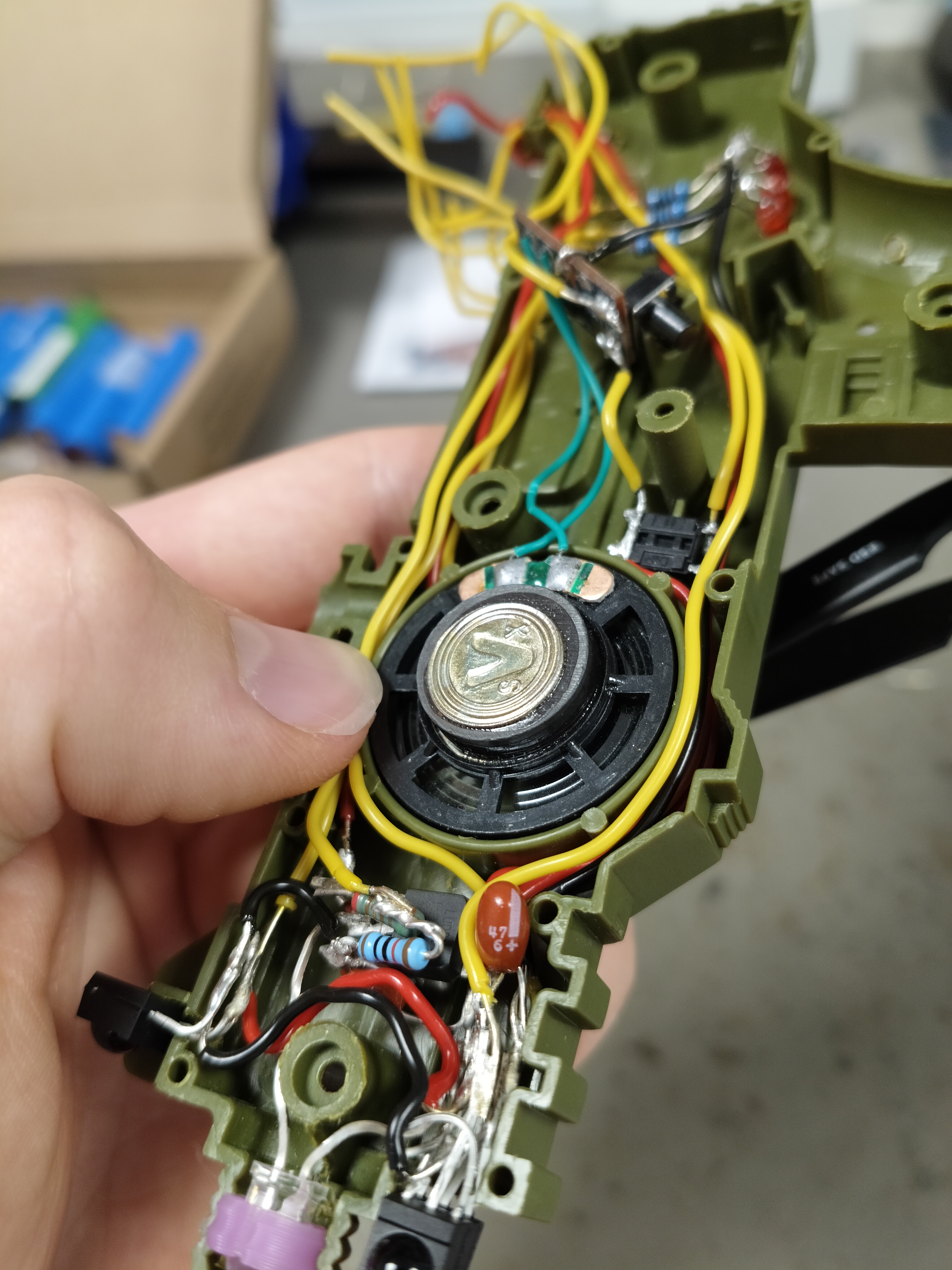
Problemet virkede simpelt at løse: Byg et standard IR LED + modtager-system med en ESP32, og tilføj et stødkredsløb reverse engineered fra et generisk stødhalsbånd. Jeg brugte et hjemmebygget hobby-lasertag-system bygget af en kammerat som udgangspunkt og købte tilsvarende komponenter til den første 2-pistolers prototype for at teste IR-kommunikationen.
The problem seemed simple to solve: Just build a common IR LED + receiver system with an esp32 and add a shock circuit reverse engineered from a generic shock collar. I used a custom hobby laser tag system built by a peer as the baseline and bought similar components for the first 2-pistol prototype in order to test the IR communication.
Iterationslog Iteration Log
V1 V1
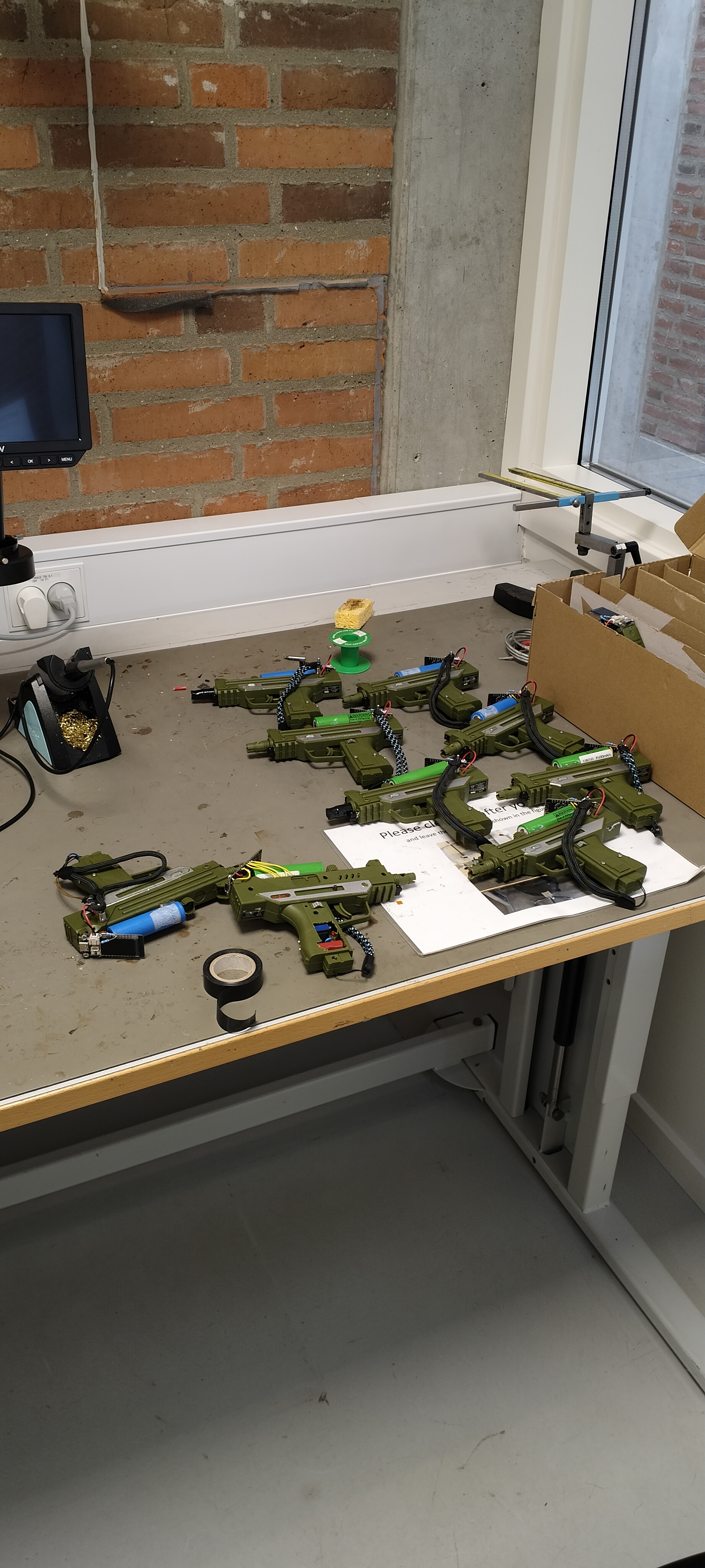
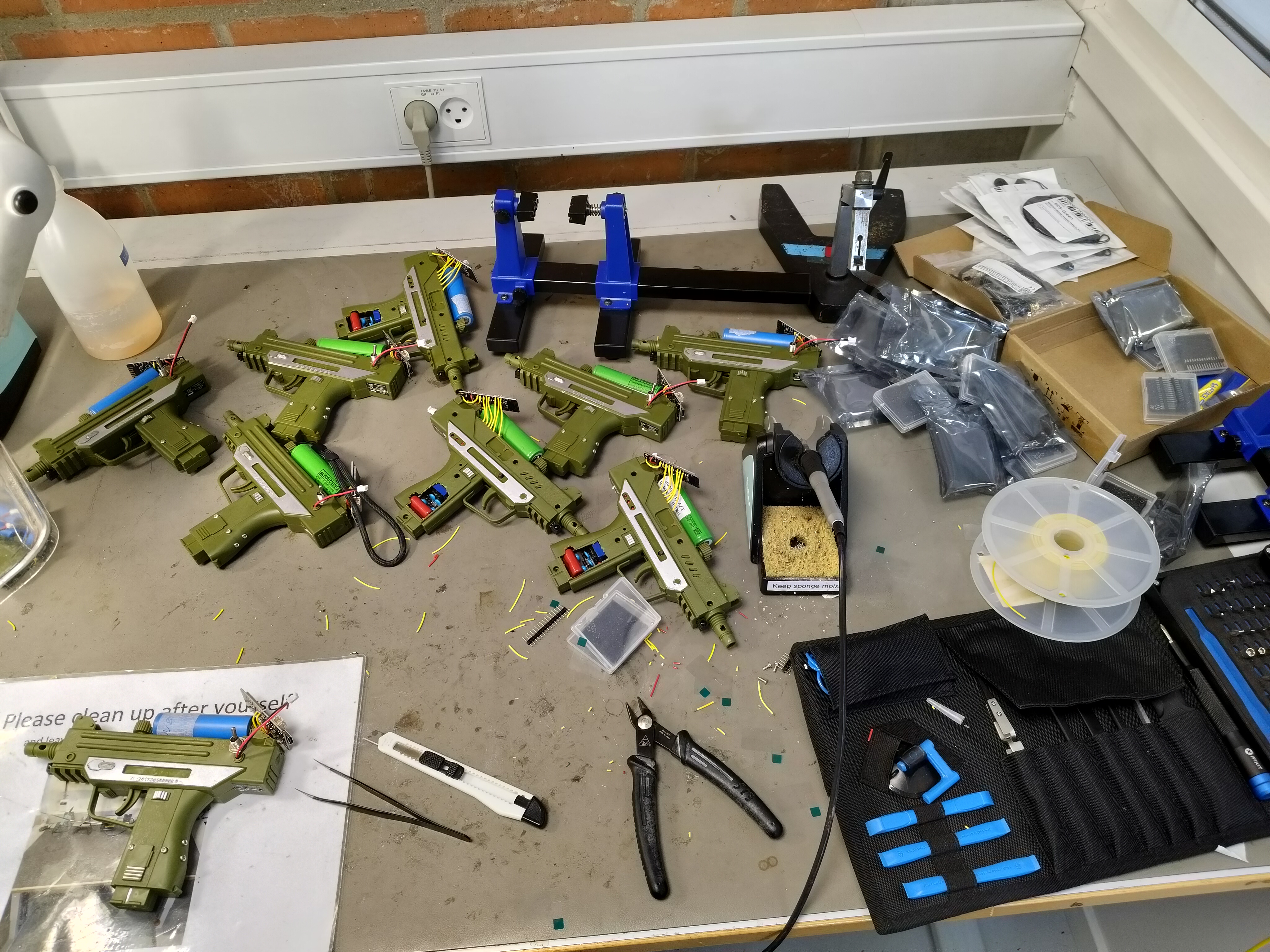
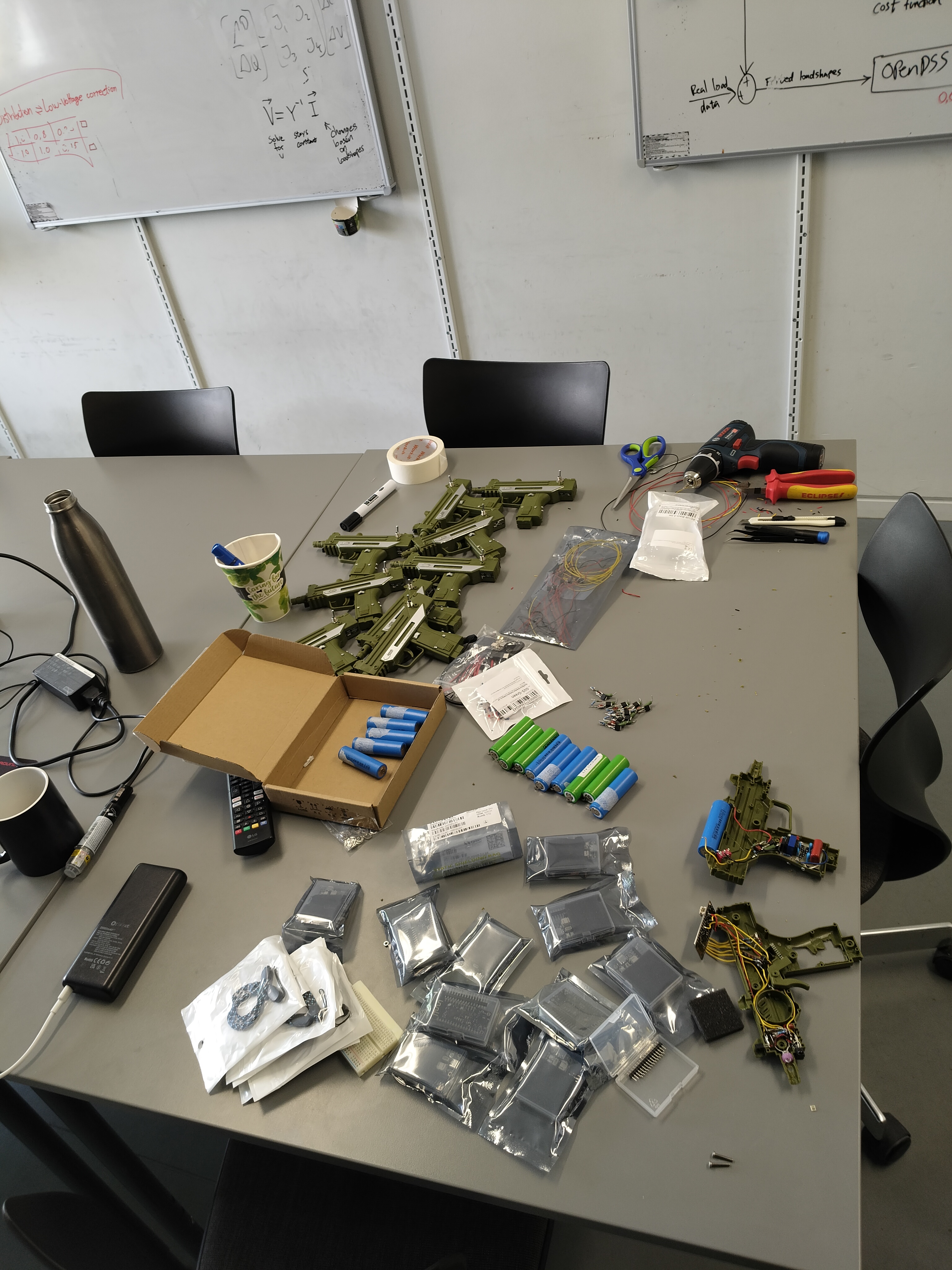
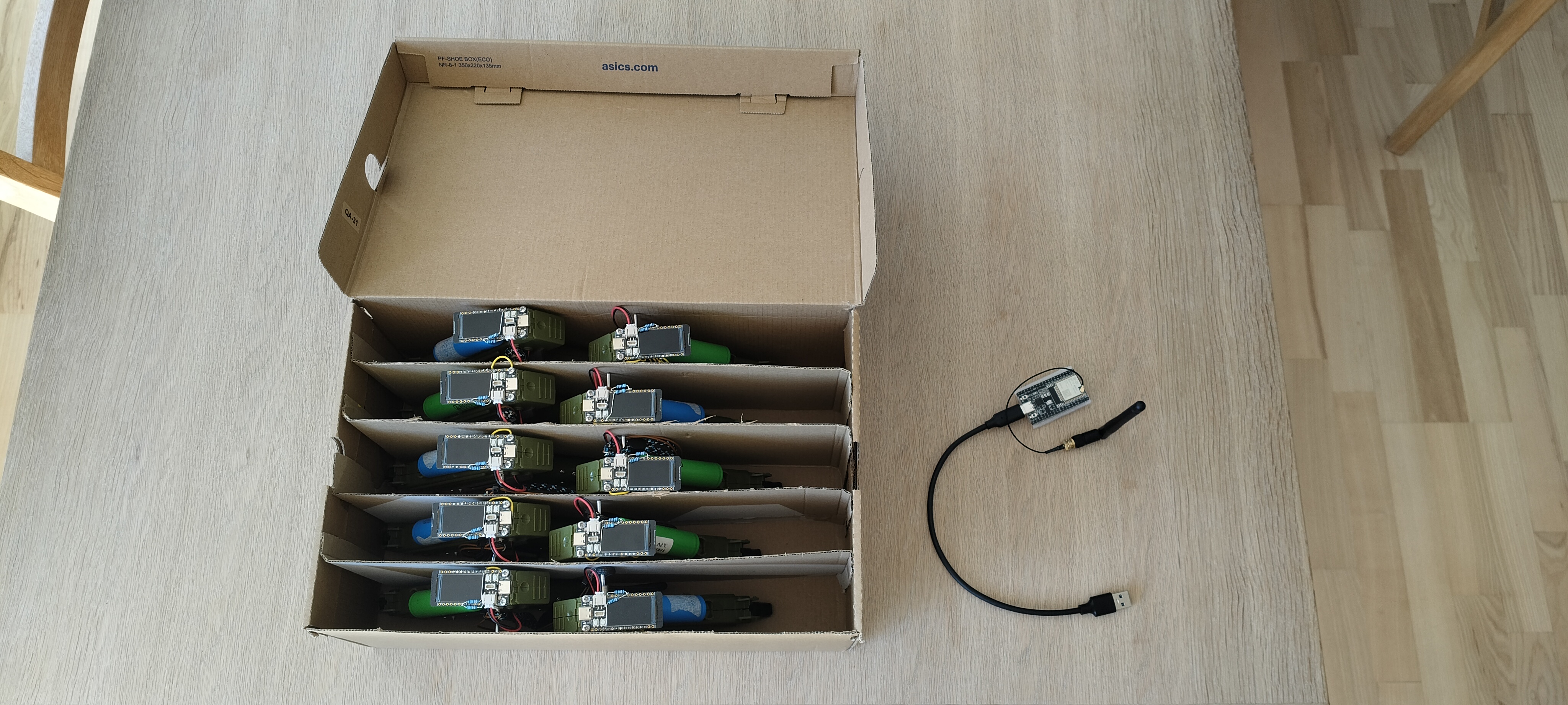
Efter to-pistolers prototypen virkede, samlede jeg 8 mere og tilføjede en master-ESP32 til periodisk at spørge hver pistol om dens HitData for at samle ét sandt scoreboard baseret udelukkende på IR-træfferne. Dette betyder, at tabte WiFi-pakker aldrig bliver et problem. Hvis en pistol er uden for rækkevidde af masteren, opdateres scoreboardet blot ikke med den pistols data, før den er inden for rækkevidde igen. På denne måde er IR altid sandheden. Der mistes ALTID liv (HP), uanset om træf-bekræftelsen når frem til skytten eller ej. Det første sæt med 10 pistoler anvender hardcodede master/slave MAC-adresser for simpelhedens skyld i koden. Selvom det med succes demonstrerede kernemekanikken i IR-træfregistrering og ESP-NOW kommunikation, er det ikke en skalerbar løsning, da udskiftning af én enhed betyder, at alle andre enheder skal omprogrammeres.
After the two-pistol prototype worked, i assembled 8 more and added a master esp32 to periodically ask each pistol for its HitData to assemble a single true scoreboard based on only the IR hits. This means lost wifi packets never becomes a problem. If one pistol is outside range from the master, then the scoreboard is simply not updated with that pistols information until it returns in range. In this way the IR is always the truth. HP is ALWAYS lost regardless of the hitconfirmation reaching the shooter or not. The first 10 pistol set utilizes hardcoded master/slave MAC-addresses for simplified code. While it successfully demonstrated the core mechanics of IR hit detection and ESP-NOW communication, it is not a scalable solution as replacing one device means all other devices must be reprogrammed.
Derudover tog jeg det første sæt med ud til lasertag-centeret VRGame i Nørresundby. Ejeren var meget imponeret over prototypen og udtrykte, at det tilføjede stødkredsløb er et unikt og værdifuldt koncept. Ejeren forklarede også de udfordringer, de har med deres eksisterende system, såsom manuelt at tænde alle pistoler og forbinde dem — hvilket gav værdifuld indsigt i den vigtige driftmæssige hverdag for en center-ejer. Ejeren fortalte mig, at for at han ville overveje et system som mit, skulle det bestå af fysisk større og mere robuste pistoler. Brugerne passer ikke særligt godt på hardwaren, så det skal kunne tåle tæsk.
Additionally, i took the first set to the laser tag venue VRGame in Nørresundby. The owner was very impressed with the prototype and expressed that the added shock circuit is a unique and valuable proposition. The owner also explained the hurdles they have with their existing system such as manually turning all pistols on and connecting them - providing valuable insight into the important "everyday" convenience perspective of the venue owner. The owner told me that, in order for him to consider a system such as mine, it had to consist of physically larger and more robust pistols. The users are not very caring of the hardware and thus it needs to be able to take a beating.
V2 V2
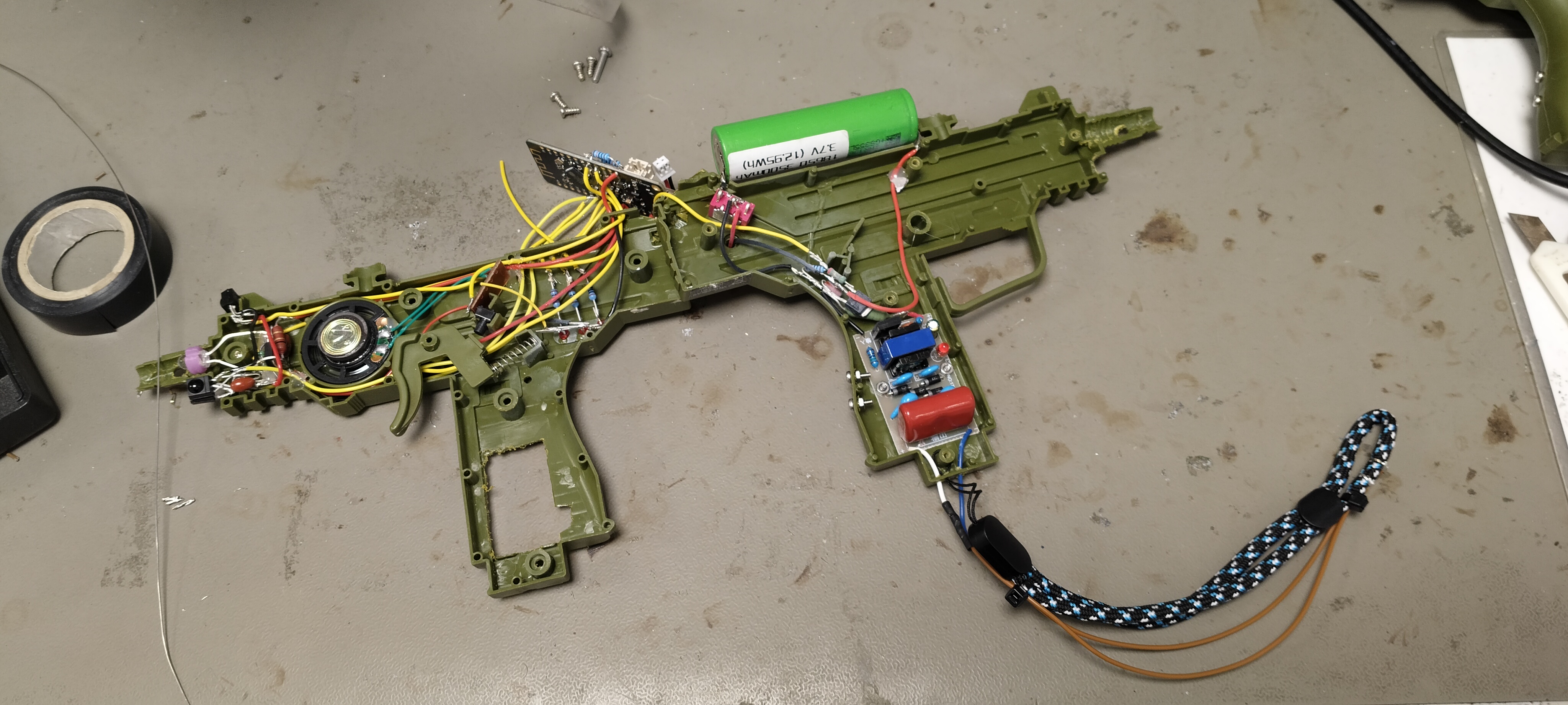
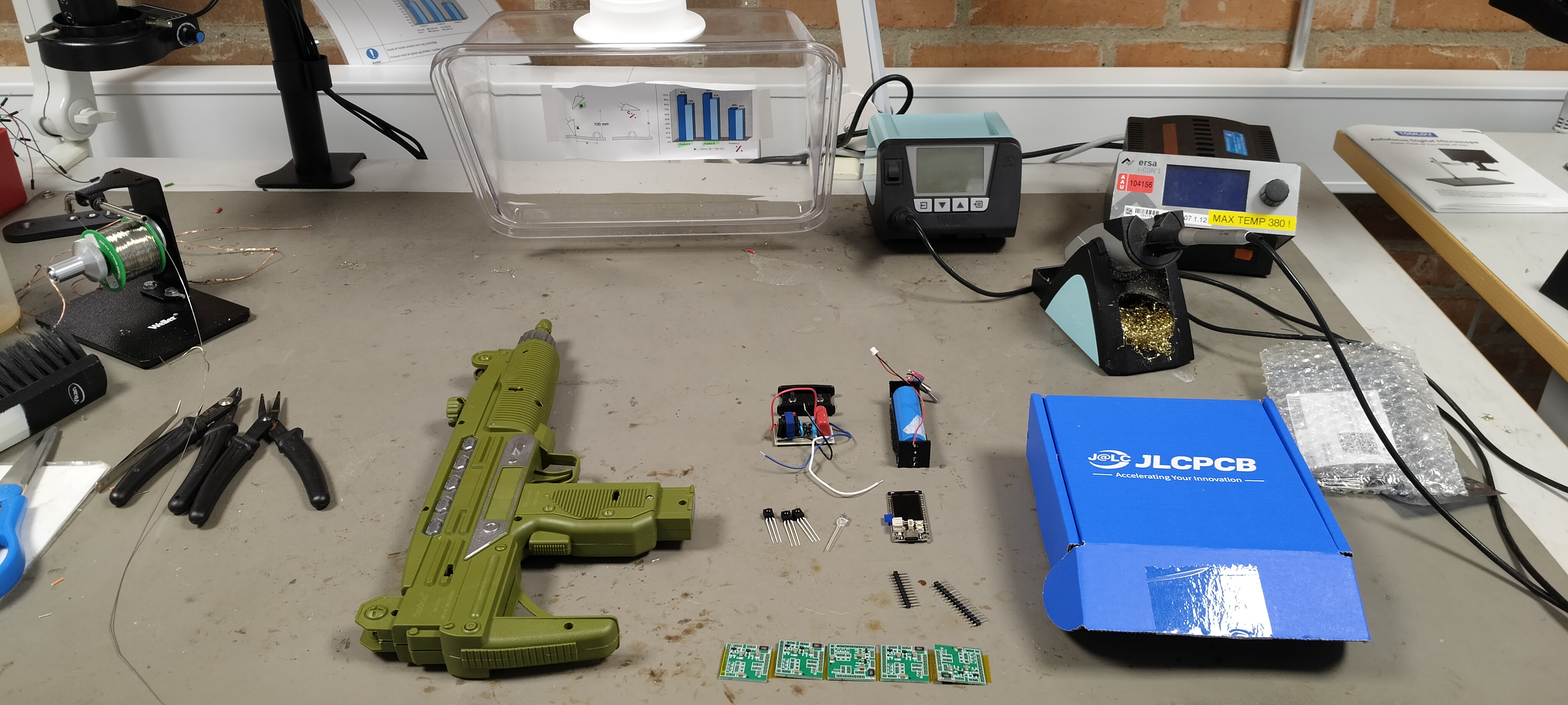
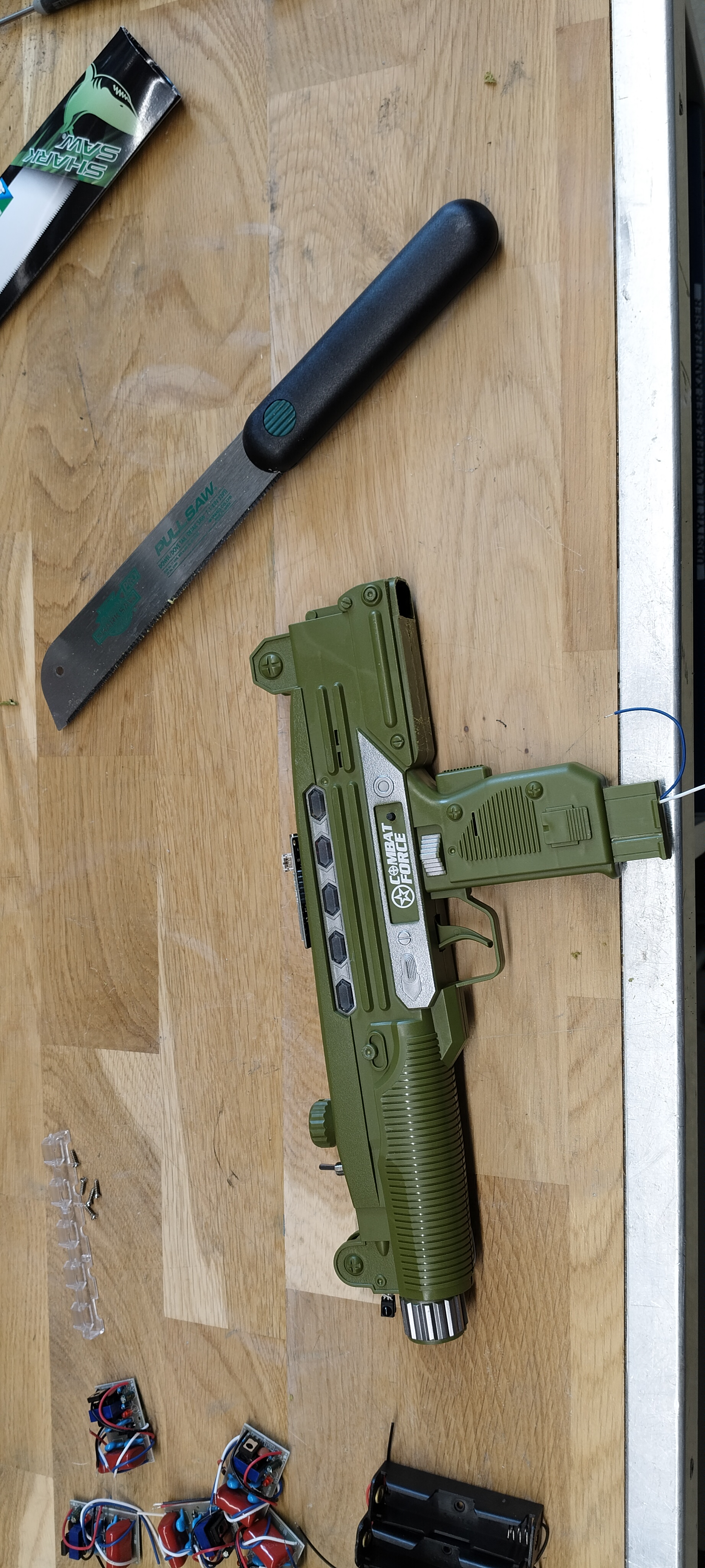
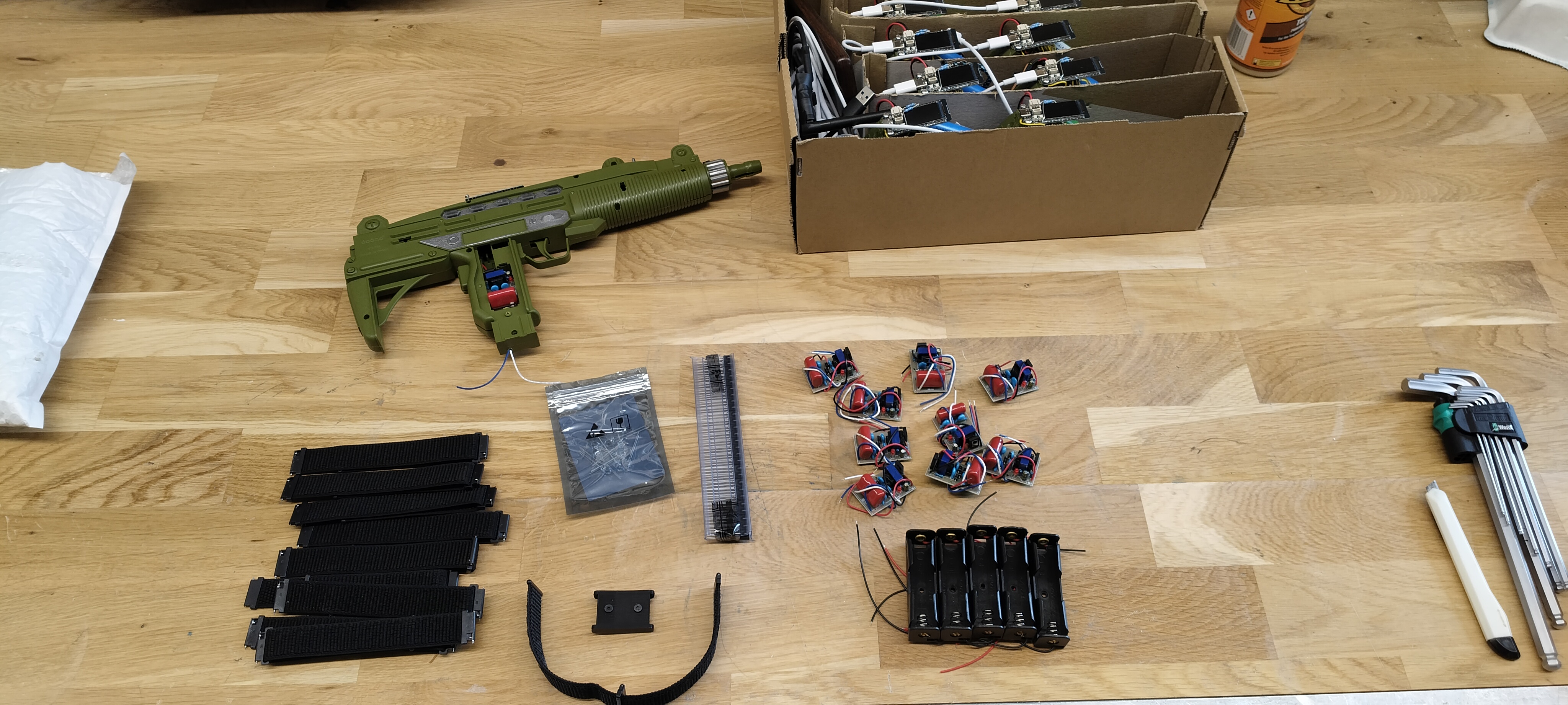
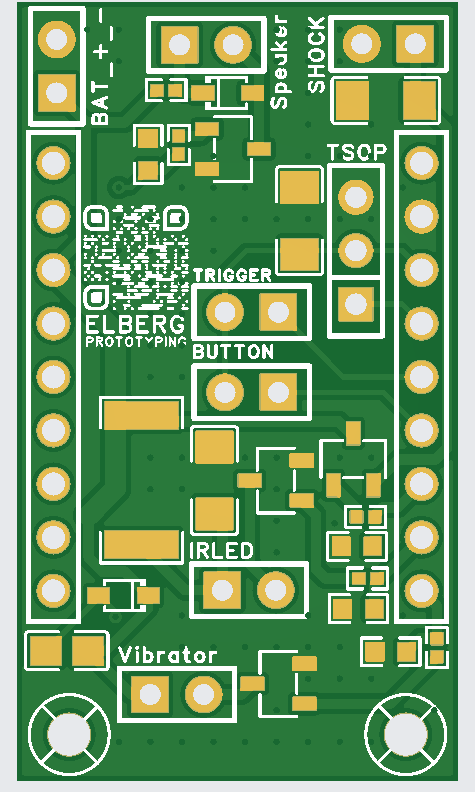
Den anden iteration introducerede en dynamisk, ikke-hardcodet master/slave arkitektur. Vi implementerede dynamisk parring, hvor masteren dynamisk kunne broadcaste og polle slaves, og dermed håndtere aktive spillere uden hardcodede MAC-adresser. Derudover skaffede vi større legetøjspistoler med tilføjet vibrationsfeedback-motorstyring og skiftede til et printkort (PCB) til switching-kredsløbene i stedet for manuelt loddede komponenter. Temaet for anden iteration var skalerbarhed og holdbarhed. Helt specifikt fokus på at reducere komponentantal, reducere manuelt arbejde og bygge pistolen til at overleve hårdhændet brug.
The Second iteration introduced a non-hardcoded master/slave architecture. We implemented dynamic pairing where the master could dynamically broadcast and poll slaves, managing active players without hardcoded MAC addresses. Additionally, we sourced larger toy pistols with added vibration feedback motor control and switched to a PCB for the switching circuits instead of manually soldered components. The theme of the second iteration was scalability and durability. Specifically a focus on reducing component count, reducing manual labor and building the pistol to survive violent use.
Væsentlige ændringer omfatter:
Major changes include:
- Skift fra triple-LED indikatorer til den ene indbyggede NEOPIXEL på mikrocontrolleren.
- Skift fra den klodsede Tdisplay ESP32-S3 mikrocontroller til den mindre Waveshare ESP32-S3 variant.
- Skift til en større legetøjspistol, hvilket gør det muligt at montere alle komponenter forsvarligt inde i kabinettet.
- Skift fra spinkel ledning til komfortable og slidstærke urremme til stødkredsløbet.
- Switching from triple-LED indicators to the single inbuilt NEOPIXEL on the microcontroller.
- Switching from bulky Tdisplay esp32-s3 microcontroller to smaller Waveshare esp32-s3 variant.
- Switching to larger toy pistol allowing all components to fit securely inside the housing.
- Switching from flimsy cord to comfortable and durable watch bands for the shock circuit.
.jpg)
Teknisk opbygning Technical Build
Hardware Arkitektur Hardware Architecture
- Topologi: Master/Slave arkitektur med Peer-to-Peer elementer. 1 Master "Base Station", pt. 10 "Slave" pistoler.
- Mikrocontrollere:
- Slaves: Waveshare ESP32-S3 1.47" LCD-boards.
- Master: ESP32 WROOM med ekstern antenne.
- Kommunikation: ESP-NOW protokol. Master poller sekventielt (ScoreboardData), Slaves svarer med løbende totaler (HitData). Øjeblikkelige træf-bekræftelser (HitConfirm) sendes via direkte P2P mellem slaves.
- Topology: Master/Slave architecture with Peer-to-Peer elements. 1 Master "Base Station" currently 10 "Slave" pistols.
- Microcontrollers:
- Slaves: Waveshare ESP32-S3 1.47" LCD boards.
- Master: ESP32 WROOM with external antenna.
- Communication: ESP-NOW protocol. Master polls sequentially (ScoreboardData), Slaves respond with running totals (HitData). Immediate hit confirmations (HitConfirm) are sent via direct P2P between slaves.
Elektronik & PCB Electronics & PCB
- IR-system: VSLY5940 IR LED styret af en N-channel MOSFET. 3x TSOP32338 modtagere pr. pistol.
- Feedback-systemer: Eksisterende legetøjspistol-højttaler og vibrationsmotor forbundet til switching-kredsløb på det tilføjede printkort (PCB).
- Stød-modul: 4V til 1800V konverter styret via N-channel MOSFET til korte mikro-ampere stød.
- Strømforsyning: 18650 Li-ion celle, som udnytter ESP32'erens indbyggede ladekredsløb. Powerbank til basestationen.
- Display: 1.47" TFT-displayet viser information i realtid.
- IR System: VSLY5940 IR LED controlled by an N-channel MOSFET. 3x TSOP32338 receivers per gun.
- Feedback Systems: Existing toy gun speaker and vibration motor wired to switching circuits on the added PCB.
- Shock Module: 4V to 1800V converter controlled via N-channel MOSFET for micro-ampere short shocks.
- Power: 18650 Li-ion cell utilizing the ESP32's inbuilt charging circuit. Power bank for the base station.
- Display: The 1.47" TFT display provides information in real time.
Embedded Software — RTOS Embedded Software — RTOS
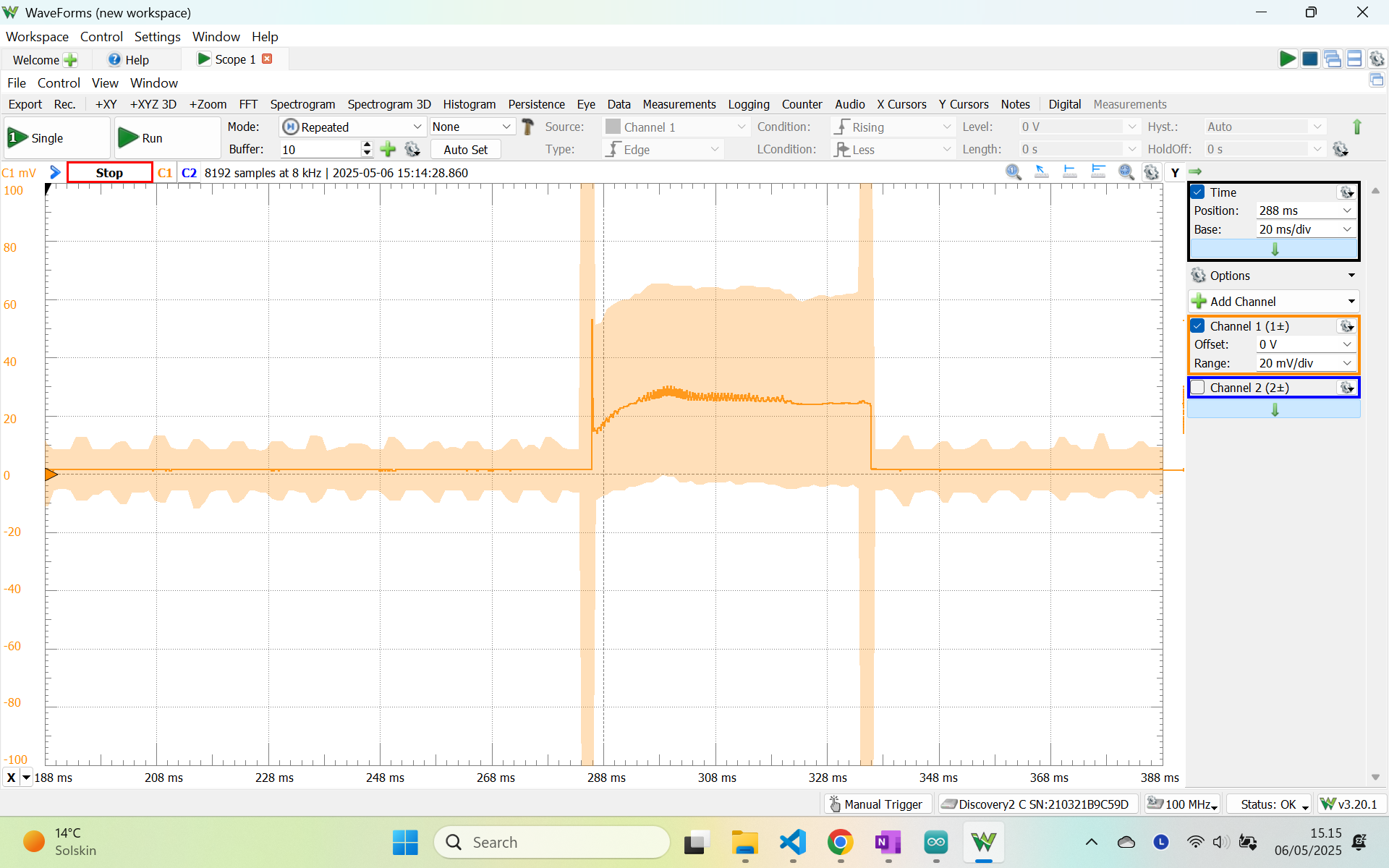
- Protokol: NEC-protokol (38kHz bærebølge, 67.5ms pakketid) til pålidelig transmission af træffere. Pakker indeholder PlayerID, Damage og et 8-bit Timestamp til at afvise duplikerede træf.
- Task Arkitektur: FreeRTOS håndterer samtidige tasks. Opgaverne er fordelt på dual-core ESP32-S3, så opgaver uden strenge timing-krav grupperes på core 0, mens netværks-tasks kører på core 1.
- Dataintegritet: Slaves fastholder den autoritative løbende total over modtagne træffere. Masteren samler de samlede data, hvilket giver eventual consistency og korrekte scores selv ved periodisk tabte forbindelser. Striks MUTEX-implementering i kritiske sektioner sikrer, at delte ressourcer aldrig korrumperes.
- Protocol: NEC protocol (38kHz carrier, 67.5ms packet duration) for reliable hit transmission. Packets include PlayerID, Damage, and an 8-bit Timestamp for duplicate hit rejection.
- Task Architecture: FreeRTOS handles concurrent tasks. The tasks are divided on the dual-core esp32-s3 to group all the tasks without strict timing needed on core 0, while network tasks are running on core 1.
- Data Integrity: Slaves maintain authoritative running totals of hits received. The master aggregates complete data, providing eventual consistency and correct scores even with intermittent connections. Strict MUTEX implementation in critical sections mean shared resources are never corrupted.
Tablet UI Tablet UI
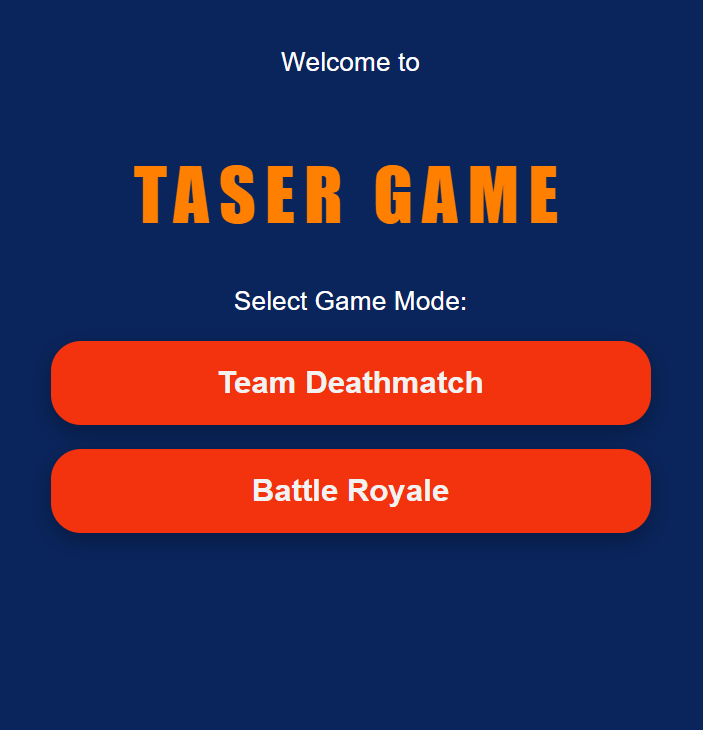
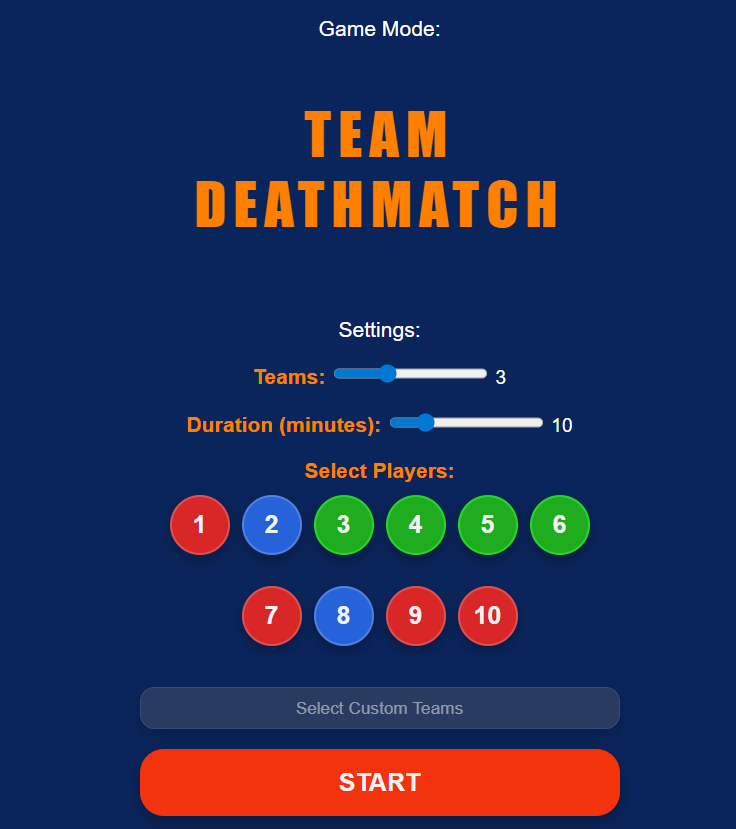
- Brugerflade: En tablet forbinder til Master-basestationens webserver.
- Funktioner: Giver en nem brugergrænseflade til spilopsætning (gamemodes, holdantal, varighed). Under spillet vises et realtids globalt scoreboard med Player Kills, Player Damage og Team Scores. Efter spillet vises det endelige scoreboard med fremhævelse af de bedste spillere.
- Interface: A tablet connects to the Master base station's web server.
- Features: Provides an easy user interface for game configuration (game modes, team count, duration). During the game, it displays a real-time global scoreboard showing Player Kills, Player Damage, and Team Scores. After the game it shows the final scoreboard and highlights the top performers.
Tidsforbrug Time Investment
| Fase | Timer (ca.) |
|---|---|
| Research & Systemarkitektur | 50 |
| Manuel samling v1 | 30 |
| PCB design & samling v2 | 20 |
| Embedded softwareudvikling v1 og v2 | 40 |
| I alt | 140 |
| Phase | Hours (approx) |
|---|---|
| Research & System architecture | 50 |
| Manual assembly v1 | 30 |
| PCB design & assembly v2 | 20 |
| Embedded software development v1 and v2 | 40 |
| Total | 140 |
Brugervalidering User Validation
V1-sættet blev testet med et gymnastikhold for at evaluere stødstyrke, brugervenlighed og gamemode-logik. Testen gav følgende feedback fra brugerne:
The v1 set was tested with a gymnastics team to evaluate the shock magnitude, ease of use and game mode logic. The test yielded the following feedback from the users:
- Stødstyrken opleves som for kraftig på laveste trin og ændrer sig ikke markant mellem medium og højt niveau. Dette viser, at lineære varighedsparametre ikke svarer til lineær smerteopfattelse. Løsning: gør den lave indstilling kortere i stødvarighed. Behold medium varighed og øg høj varighed for at differentiere dem mere.
- Brugen var intuitiv og gamemode-logikken fungerede. Tablet-UI'en var nem at navigere i.
- Shock magnitude is perceived as too high for the lowest selection and does not change significantly with the medium and high level. This shows that the linear duration parameters do not equate to linear pain perception. Fix: make the low setting a shorter shock duration. Keep medium duration and increase high duration to differentiate those more.
- Use was intuitive and game mode logic worked. Tablet UI was easy to navigate.
Erfaringer gjort Lessons Learned
Manuel samling og ombygning tog langt mere tid end forventet -> Mange timer kan spares ved at designe et printkort (PCB) tidligere og planlægge efter færrest mulige fysiske ændringer, når man ombygger et eksisterende produkt.
Manual assembly and retrofitting took much more time than anticipated -> Many hours can be saved by designing a PCB earlier and planning for least possible amount of physical change when retrofitting an existing product.